+91-7624021071
 Download Brochure
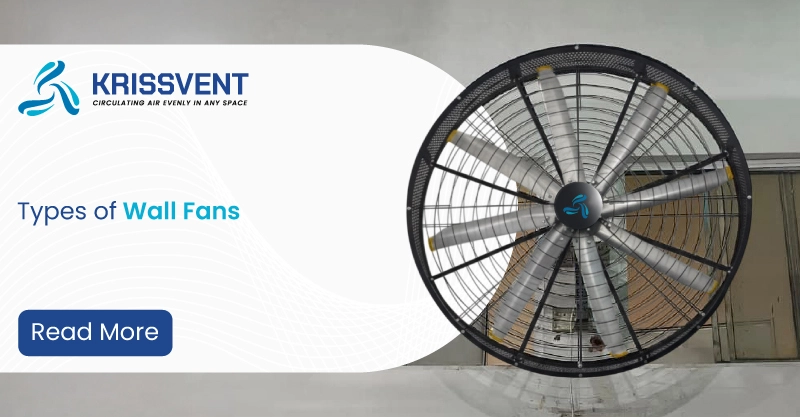
From homes and offices to factories and workshops, wall fans are used everywhere. But not all wall fans are the same; each type is designed with a specific purpose and setting in mind.
In this article, we’ll explore the different types of wall fans, their uses, and how to select the best one for your application.
1. Domestic Wall Fans (For Homes and Offices)
Domestic wall fans are the most common type of wall fans used in houses, small shops, offices, and restaurants. These fans are compact, lightweight, and stylishly designed to blend into interiors while offering powerful airflow.
Key Features
- Easy wall-mount installation
- Adjustable oscillation for wider air coverage
- Compact size for small and medium rooms
- Silent operation and energy efficiency
Best Suited For
- Bedrooms and living rooms
- Small offices and cabins
- Retail stores and salons
- Cafes and restaurants
These fans provide localised air circulation and are perfect for spaces where ceiling fans cannot be installed due to limited ceiling height or interior design constraints.
2. Industrial Wall Fans (For Factories and Warehouses)
Industrial wall fans are built for performance and durability. Unlike domestic fans, they have a larger blade diameter, a stronger motor, and heavy-duty body construction to withstand tough industrial conditions.
These fans are specifically designed to circulate large volumes of air in factories, warehouses, workshops, and production areas.
Key Features
- High air volume output for large spaces
- Durable metal construction with corrosion resistance
- PMSM or direct drive motors for energy efficiency
- Low noise operation despite heavy-duty performance
- Aerodynamic blade design for maximum air throw
Best Suited For
- Factories and manufacturing units
- Warehouses and logistics centres
- Workshops and automotive facilities
- Gyms and commercial halls
If you’re looking for a powerful cooling and ventilation solution for your workspace, an Industrial Wall Fan is the ideal choice. These fans ensure strong airflow and temperature control even in low-height industrial environments.
3. Commercial Wall Fans (For Shops, Cafes, and Gyms)
Commercial wall fans are designed for semi-industrial use, where moderate to high airflow is needed, but aesthetics also matter. They bridge the gap between domestic and industrial fans.
Key Features
- Medium-sized fan blades for efficient air movement
- Sleek and professional appearance
- Adjustable tilt and oscillation controls
- Easy maintenance and low energy consumption
Best Suited For
- Gyms and fitness centres
- Cafes, restaurants, and showrooms
- Auditoriums and public halls
- Retail stores and warehouses
Commercial wall fans offer a balance between performance and appearance — making them a popular choice for customer-facing business environments.
4. Exhaust Wall Fans (For Ventilation and Air Removal)
While most wall fans are designed for cooling, exhaust wall fans work oppositely; they remove hot, stale, or contaminated air from a space. These are typically installed in kitchens, bathrooms, or industrial areas where air quality needs constant improvement.
Key Features
- Removes odour, heat, and fumes
- Compact design suitable for wall or glass mounting
- Low power consumption
- Improves indoor air quality
Best Suited For
- Kitchens, restrooms, and laboratories
- Industrial workstations and paint booths
- Chemical processing or storage areas
Exhaust wall fans play an essential role in maintaining healthy air circulation and preventing the buildup of humidity or harmful gases.
5. Mist Wall Fans (For Cooling and Outdoor Comfort)
Mist wall fans combine the functions of a fan and a misting system. They are ideal for outdoor environments where cooling is required during hot weather.
Key Features
- Integrated misting nozzles for water spray
- Effective temperature reduction by 4°C to 6°C
- Adjustable mist intensity
- Rust-resistant materials for outdoor use
Best Suited For
- Cafes and open-air restaurants
- Outdoor events and patios
- Agricultural or greenhouse setups
Mist wall fans are an excellent choice for providing comfort in humid or high-temperature outdoor areas.
How to Choose the Right Wall Fan
When choosing a wall fan, consider these key points:
- Room size and height – Larger areas require fans with higher air delivery.
- Purpose of use – Cooling, ventilation, or decorative purpose.
- Environment – Indoor, outdoor, residential, or industrial setup.
- Noise tolerance – Choose low-noise models for quiet environments.
- Energy efficiency – Look for energy-efficient motors (like PMSM or BLDC).
Selecting the right wall fan ensures effective air movement, energy savings, and a comfortable environment for both homes and workplaces.