+91-7624021071
 Download Brochure
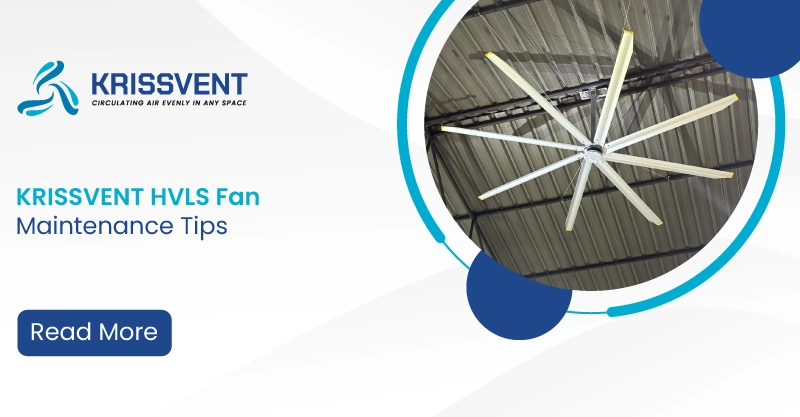
At KRISSVENT, we recommend a structured HVLS fan maintenance routine based on operating conditions, usage hours, and environmental factors. Most HVLS fan failures are not design-related; they occur due to poor or irregular maintenance.
This guide outlines practical maintenance tips for HVLS fans to help facility managers ensure smooth, trouble-free operation year after year.
Why Regular HVLS Fan Maintenance Is Important
Proper maintenance helps:
- Ensure safe and uninterrupted operation
- Maintain airflow efficiency and comfort levels
- Prevent imbalance, vibration, and noise
- Protect electrical components and controls
- Extend fan lifespan and preserve warranty coverage
Important Safety Note:
Never attempt maintenance on an HVLS fan unless the electrical supply is completely disconnected, locked out, and tagged out.
General Maintenance Guidelines for HVLS Fans
These general checks should be part of every maintenance cycle, regardless of fan size or application.
1. Keep the Control Enclosure Clean
The control enclosure should remain free from grease, dust, and dirt buildup. Accumulated contaminants can affect electronic components and lead to overheating or failure.
2. Check All Fasteners Before Restarting
Before restarting the fan after maintenance, ensure:
- All nuts, bolts, and clamps are properly tightened
- No fasteners are missing, loose, or damaged
Loose fasteners can cause vibration, imbalance, and long-term structural issues.
3. Secure the Control Enclosure Door
After completing maintenance, always ensure the control enclosure door is securely closed. This prevents tampering, accidental contact, and electrical shock hazards.
4. Keep the Fan Blade Path Clear
Ensure the fan’s operating area is:
- Free from obstructions
- Clear of stored materials, cables, or structural elements
This ensures safe airflow and prevents accidental damage.
5. Follow a Usage-Based Maintenance Schedule
KRISSVENT’s recommended maintenance schedule is based on approximately 5,000 operating hours per year.
For extreme environments such as:
- High humidity
- Dusty or corrosive atmospheres
- Large temperature fluctuations
Shorter maintenance intervals are strongly recommended.
6. Prevent Imbalance Caused by Dust and Oil
In industrial environments, oil mist and dust may accumulate on blades over time. This can cause imbalance and vibration. Periodic inspection and cleaning of:
- Fan blades
- Inlet areas
- Moving components
Helps maintain smooth and safe operation.
HVLS Fan Maintenance Checklist – Every 3 Months
Enclosure Cooling Fan Maintenance
Proper cooling of electronic components such as VFDs (Variable Frequency Drives) is critical.
Steps to follow:
1. Remove the outer black plastic housing of the enclosure cooling fan.
- The cover is held by frictional clips and can be gently pried off.
2. Inspect the fan filter for grease or debris buildup.
3. Clean or replace the filter if contamination is present.
Warning:
Failure to clean or inspect the enclosure cooling fan may cause overheating, leading to VFD or electronics failure.
VFD warranty may be denied if quarterly filter inspections are not performed and logged.
HVLS Fan Maintenance Checklist – Every 6 Months
A more detailed inspection should be performed every six months to ensure mechanical and electrical integrity.
1. Electrical Wiring and Controls
- Inspect all wiring and control connections
- Re-tighten any loose electrical terminals
Loose connections can cause overheating, malfunction, or system failure.
2. Inspect and Clean Fan Blades
- Ensure blades are intact, level, and properly aligned
- Clean blades as required
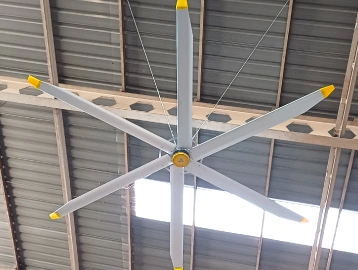
KRISSVENT HVLS fan blades are made from coated aluminium, providing corrosion resistance and ease of cleaning.
3. Check Safety Cables and Guy Wires
- Physically inspect all guy wires and safety cables
- Re-tighten clamps if necessary
These components are critical for safe fan suspension.
4. Inspect All Mechanical Fasteners
- Check nuts, bolts, and clamps
- Ensure none are missing, loose, or damaged
- Repair or replace components if required
You may like to read this: Maintenance Tips for Industrial Exhaust Fans
Maintenance Documentation: A Best Practice
KRISSVENT strongly recommends recording all maintenance and service activities in a dedicated maintenance log. Proper documentation:
- Helps track service intervals
- Supports warranty claims
- Improves long-term operational planning
- Ensures compliance with safety audits
Final Thoughts
Regular maintenance is not optional; it is essential for safe, efficient, and long-lasting HVLS fan operation. By following a structured maintenance routine, businesses can prevent costly breakdowns, maintain airflow performance, and protect their investment.
KRISSVENT HVLS fans are engineered for durability and efficiency, but consistent maintenance is the key to unlocking their full lifespan and performance potential.
If you need expert guidance on HVLS fan installation, operation, or maintenance best practices, the KRISSVENT team is always here to help.