+91-7624021071
 Download Brochure
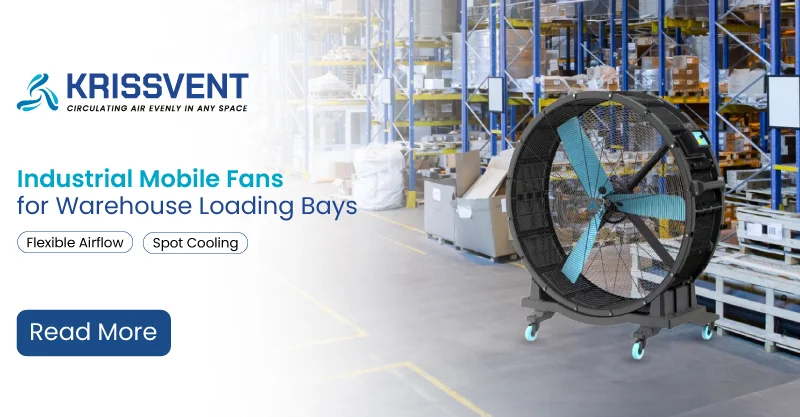
Warehouse loading bays are one of the most challenging areas to maintain comfort. Frequent movement of trucks, open shutter doors, material handling activities, and outdoor heat exposure can create hot zones where workers spend long periods loading and unloading goods.
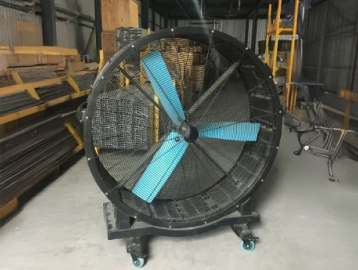
Industrial mobile fans for warehouse loading bays provide a flexible spot-cooling solution by delivering targeted airflow exactly where it is needed without requiring permanent installation.
The right fan selection depends on the loading bay size, airflow requirement, worker activity, and how frequently the cooling location changes.
Why Use Industrial Mobile Fans in Warehouse Loading Bays?
Loading bays experience constantly changing conditions.
Unlike fixed ventilation systems, mobile fans can be moved between different work zones depending on operational requirements.
They can help:
- Provide direct airflow to loading and unloading areas
- Improve worker comfort during hot conditions
- Reduce heat discomfort near open dock doors
- Support temporary work zones
- Provide flexible cooling without permanent installation
- Improve air circulation in areas where fixed fans are difficult to install
Mobile fans are especially useful in warehouses where activities and workforce locations change throughout the day.
What is Spot Cooling in Industrial Spaces?
Spot cooling means providing airflow directly to a specific working area instead of cooling the entire warehouse.
In loading bays, this approach is useful because:
- Doors are frequently opened
- Conditioned air can escape quickly
- Large areas may not require complete cooling
- Workers are concentrated around specific loading points
An industrial mobile fan creates focused airflow around these active zones, helping improve comfort where it matters most.
Where Should Mobile Fans Be Placed in Loading Bays?
The placement of mobile fans should follow the actual work activity.
Common locations include:
- Near truck loading and unloading points
- Beside dock platforms
- Around packing and dispatch areas
- Near temporary workstations
- In high-heat zones near external openings
- Along warehouse entry and exit points
The objective is to direct airflow towards workers while keeping vehicle movement and material handling operations safe.
Should Mobile Fans Blow Towards or Away From Loading Doors?<.h2>
The correct direction depends on the purpose of airflow.
For Worker Comfort
Position the fan so airflow reaches the occupied working area.
Example:
Fan → Loading Team → Work Area
For Heat Removal
Airflow direction may be planned to move hot air away from the working zone.
Example:
Hot Zone → Exhaust / Outdoor Area
Avoid positioning fans where they may:
- Blow dust into stored goods
- Disrupt packaging materials
- Affect safety signage
- Create airflow conflicts with exhaust systems
How to Select the Right Industrial Mobile Fan?
Before selecting a mobile fan, consider:
| Factor | Why It Matters |
|---|---|
| Airflow capacity | Determines the coverage area |
| Fan size | Should match the working zone |
| Loading bay size | Larger areas may require stronger airflow |
| Mobility requirement | Determines wheel and movement needs |
| Noise level | Important for active workplaces |
| Power availability | Required for installation flexibility |
| Operating environment | Dust, heat, and outdoor exposure affect selection |
The right fan should provide sufficient airflow without creating unnecessary disturbance.
Mobile Fans vs Fixed Industrial Fans
Both solutions have different applications.
| Industrial Mobile Fans | Fixed Industrial Fans |
|---|---|
| Can be moved between locations | Permanent installation |
| Suitable for changing work zones | Suitable for fixed areas |
| Quick deployment | Requires installation planning |
| Ideal for spot cooling | Suitable for continuous airflow |
| Useful in loading bays | Useful for dedicated ventilation zones |
For warehouses with changing operations, mobile fans provide greater flexibility.
What Should You Check Before Installing Mobile Fans?
Although mobile fans do not require permanent installation, planning is still important.
Check:
- Loading bay dimensions
- Worker positions
- Vehicle movement paths
- Electrical socket availability
- Floor condition
- Dust and moisture exposure
- Storage material sensitivity
- Required airflow direction
- Safety clearance
- Fan movement requirements
The fan should improve comfort without affecting daily warehouse operations.
Can Mobile Fans Be Used Alongside Other Warehouse Ventilation Systems?
Yes.
Mobile fans are often used as a supporting airflow solution.
A warehouse may combine:
- HVLS Fans for large open-area air circulation
- Exhaust Fans for removing hot or stale air
- Wall Fans for fixed workstations
- Mobile Fans for flexible spot cooling
This combination allows different airflow solutions for different warehouse zones.
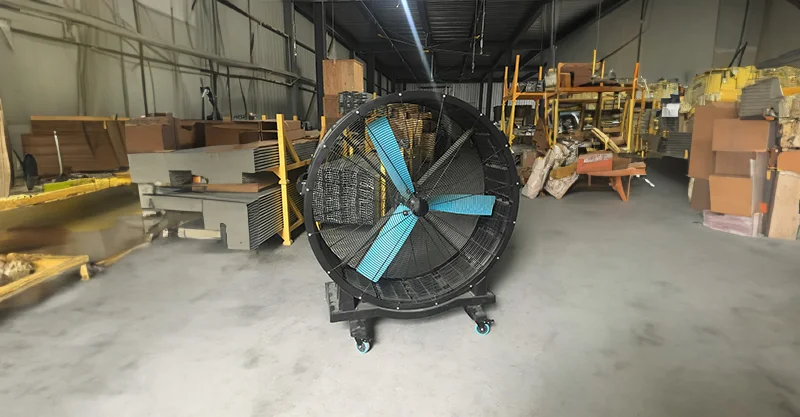
KRISSVENT Industrial Mobile Fan Installations in Warehouses
Why Choose KRISSVENT Industrial Mobile Fans?
KRISSVENT industrial mobile fans are designed for applications where flexible and targeted airflow is required.
They are suitable for:
- Warehouse loading bays
- Manufacturing areas
- Workshops
- Assembly zones
- Temporary workstations
- Industrial spaces requiring movable airflow
Fan selection can be planned according to:
- Required airflow
- Working area size
- Mobility requirements
- Operating conditions
- Placement flexibility
Instead of cooling unused areas, mobile fans allow airflow to be directed where workers need it most.
Need Spot Cooling for Your Warehouse Loading Bay?
Share your loading bay size, working conditions, and airflow requirement with KRISSVENT to identify a suitable industrial mobile fan solution.
 +91-7624021071
FAQs
1. What is an industrial mobile fan used for?
2. Where should mobile fans be placed in warehouse loading bays?
3. Can mobile fans replace warehouse ventilation systems?
4. Are mobile fans suitable for hot warehouse environments?
5. How do I select the right industrial mobile fan?
Conclusion
Industrial mobile fans for warehouse loading bays provide a practical solution for targeted airflow where permanent cooling systems may not be suitable.
The key factors are airflow capacity, placement, worker activity, safety clearance, and operational flexibility.
By positioning mobile fans around active loading zones, warehouses can create more comfortable working conditions without needing to cool the entire facility.