+91-7624021071
 Download Brochure
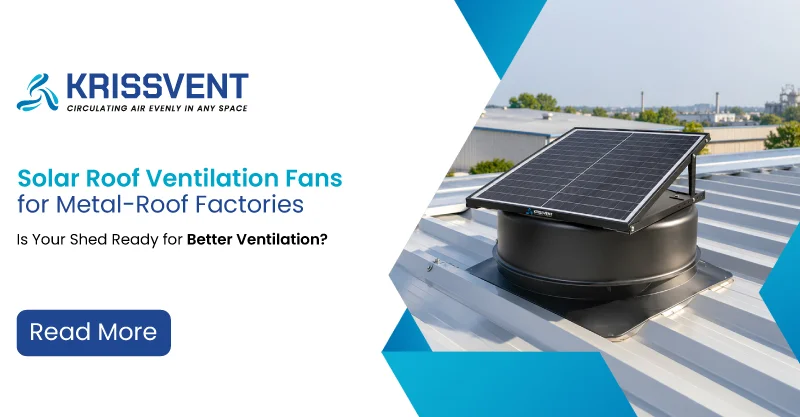
Metal-roof factories often become extremely hot during summer because metal sheets absorb and transfer solar heat into the workspace. Poor ventilation can create uncomfortable working conditions, increase heat buildup, and reduce indoor air quality.
Solar roof ventilation fans for factories help remove hot air trapped near the roof and improve natural airflow using solar energy.
However, not every industrial shed is suitable for solar roof ventilation fans. Roof type, factory layout, heat load, and ventilation requirements should be checked before installation.
How Do Solar Roof Ventilation Fans Work?
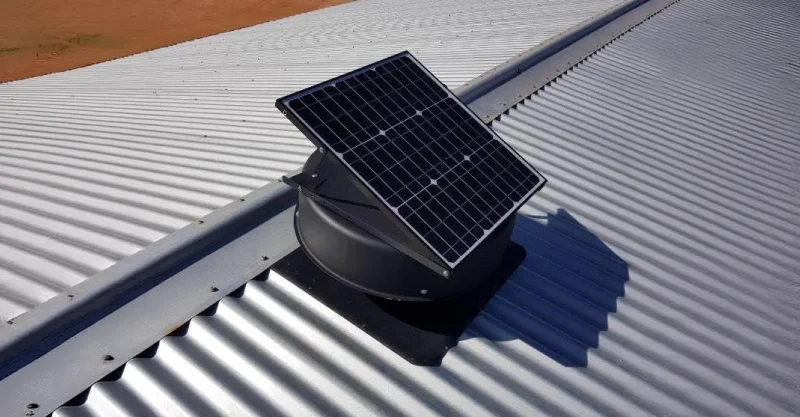
Solar roof ventilation fans use solar power to operate a motor-driven exhaust fan installed on the factory roof.
During sunlight hours, the fan removes:
- Hot air accumulated near the roof
- Stale indoor air
- Excess humidity
- Heat generated from machinery and operations
As hot air exits through the roof fan, fresh air enters through available openings such as doors, windows, or ventilation inlets.
Simple airflow process:
Fresh Air Entry → Factory Floor → Hot Air Rises → Solar Roof Fan Exhausts Air
Is Your Factory Shed Suitable for Solar Roof Ventilation Fans?
A metal-roof factory is generally suitable when it has:
- Large roof surface area
- Heat buildup near the ceiling
- Poor natural ventilation
- Long operating hours under sunlight
- High indoor temperature compared to outside conditions
However, suitability depends on the complete building design.
Factors to Check Before Installation
1. Roof Type and Structure
Solar roof ventilation fans are commonly installed on metal-sheet roofing systems.
Before installation, check:
- Roof sheet condition
- Available mounting area
- Roof slope
- Structural strength
- Waterproofing requirements
The roof should allow safe installation without affecting the building structure.
2. Factory Size and Air Volume Requirement
The number of solar roof fans depends on:
- Factory length and width
- Ceiling height
- Heat generated inside
- Number of workers
- Machinery operation
- Existing ventilation openings
A small shed and a large manufacturing plant will require different ventilation planning.
3. Heat Sources Inside the Factory
Factories with higher heat generation usually benefit more from roof ventilation.
Common heat sources include:
- Manufacturing machinery
- Furnaces
- Welding operations
- Production lines
- Solar heat absorbed by metal roofing
The more heat produced inside the shed, the more important proper air extraction becomes.
Where Should Solar Roof Ventilation Fans Be Installed?
Placement plays an important role in ventilation performance.
Recommended installation areas:
- Above high-heat zones
- Near the highest roof points
- Along areas where hot air collects
- Distributed across large factory roofs
Avoid placing fans only near low-heat areas because they may not effectively remove trapped hot air.
For larger factories, multiple fans may be installed across different roof sections for better coverage.
Solar Roof Ventilation Fans vs Traditional Exhaust Fans
| Solar Roof Ventilation Fans | Traditional Exhaust Fans |
|---|---|
| Powered by solar energy | Requires electrical power |
| Roof-mounted installation | Wall or roof installation |
| Removes hot air from upper areas | Depends on placement |
| Suitable for daytime heat removal | Suitable for continuous operation |
| Lower operating power requirement | Requires electricity supply |
The right choice depends on factory conditions, operating hours, and ventilation requirements.
Benefits of Solar Roof Ventilation Fans for Factories
Solar roof ventilation fans can help:
- Reduce heat accumulation near the roof
- Improve workplace comfort
- Support better air circulation
- Remove trapped hot air
- Reduce dependency on electrical ventilation during daylight hours
- Provide a sustainable ventilation solution
They are commonly considered for:
- Manufacturing units
- Warehouses
- Workshops
- Industrial sheds
- Production facilities
What Should You Check Before Installation?
Before installing solar roof ventilation fans, evaluate:
- Factory roof type
- Shed dimensions
- Heat generation sources
- Existing ventilation openings
- Required airflow capacity
- Fan quantity requirement
- Roof accessibility
- Maintenance requirements
A proper assessment ensures the ventilation system matches the actual factory conditions.
KRISSVENT Solar Roof Ventilation Fan Installations
Why Choose KRISSVENT Solar Roof Ventilation Fans?
KRISSVENT provides ventilation solutions designed for industrial environments where heat buildup and air circulation are key concerns.
Fan selection can be planned based on:
- Factory size
- Roof structure
- Heat conditions
- Required airflow
- Installation requirements
Instead of installing fans randomly across the roof, KRISSVENT helps identify suitable placement and quantity according to the factory layout.
Planning Ventilation for Your Factory Shed?
Share your factory dimensions, roof type, and heat conditions with KRISSVENT to identify a suitable solar roof ventilation solution.
 +91-7624021071
FAQs
1. Are solar roof ventilation fans suitable for metal-roof factories?
2. How many solar roof ventilation fans does a factory need?
3. Can solar roof ventilation fans reduce factory temperature?
4. Do solar roof ventilation fans need electricity?
5. Where should solar roof fans be installed?
Conclusion
Solar roof ventilation fans for metal-roof factories can be an effective solution for removing trapped hot air and improving industrial ventilation.
Before installation, factors such as roof structure, factory size, heat sources, and airflow requirements should be evaluated.
A properly planned roof ventilation system helps create a more comfortable and better-ventilated industrial workspace.