+91-7624021071

 Download Brochure

An HVLS fan for horse stables is a large, slow-moving ceiling fan, usually 8 to 24 ft in diameter, that keeps air moving across stalls and aisles. Before installing one, check your stable layout, ceiling height, safe clearance from horses, fan size, dust conditions, lighting position and existing ventilation.
A stable on a hot day gets stuffy fast. Body heat, ammonia from urine, hay dust and moisture build up, and horses feel it first. Small pedestal fans help a little, but they are noisy, blow dust around and leave cables across busy aisles.
An HVLS (High Volume Low Speed) fan solves this by moving a large volume of air gently across the whole barn. To get it right, a few things need checking before installation.
Key Takeaways
- HVLS fans circulate air across the full stable using one large fan instead of many small ones.
- Fan size depends on stable layout and ceiling height, not just floor area.
- Blades must stay well clear of rearing horses and mounted riders.
- Horses settle faster with a quiet motor, soft start and no lights above the blades.
- HVLS fans move air but do not remove it, so pair them with exhaust fans or roof ventilators.
What Is an HVLS Fan for Horse Stables?
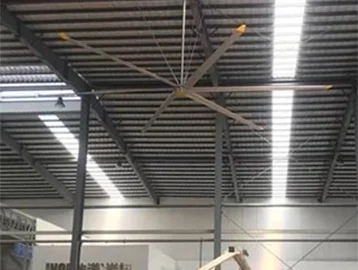
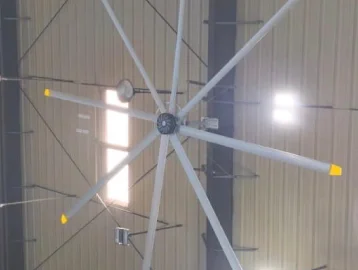
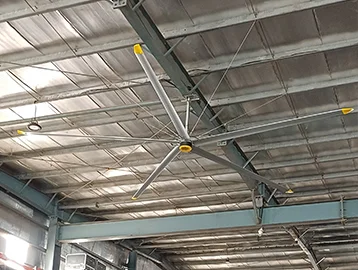
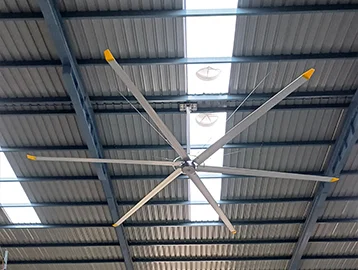
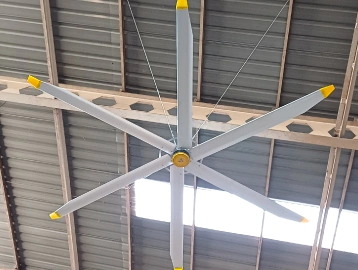
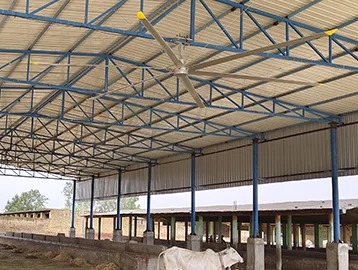
An HVLS fan for horse stables is a large industrial ceiling fan that turns slowly and pushes a wide column of air down to the floor. The air then spreads outwards, creating a light breeze through stalls and aisles.
This breeze helps sweat evaporate from a horse’s coat, so the animal feels cooler. It also reduces dead air pockets where ammonia, dust and flies settle. KRISSVENT HVLS fans are available from 8 ft to 24 ft to suit small private stables through to large equestrian centres.
Why Do Horse Stables Need Better Air Movement?
Horse stables need steady airflow because heat, ammonia, dust and moisture collect at floor level, right where horses eat and rest.
Common problems in a closed stable:
- Body heat from several large animals in one space
- Ammonia from urine and wet bedding
- Dust from hay, straw and shavings
- Damp floors and bedding
- Flies and mosquitoes in still air
Gentle airflow spreads these out, helps bedding dry faster and makes the barn less comfortable for flies.
Is an HVLS Fan Better Than Small Fans for a Stable?
Yes, for most medium and large stables. One HVLS fan covers a wide area that would otherwise need many small fans.
| HVLS Fan | Small Pedestal or Stall Fans |
|---|---|
| Covers the full stable from the ceiling | Covers one stall or spot |
| Gentle, even breeze | Strong, direct blast |
| Low noise | Often noisy |
| No cables on the floor | Cables across aisles and stalls |
| One fan to maintain | Many fans to maintain |
You can read more in why one HVLS fan can do more than 25 small fans.
What to Consider Before Installing an HVLS Fan in a Horse Stable
1. Does Your Stable Layout Suit an HVLS Fan?
Layout matters more than floor size. The fan works best where air can flow freely from the aisle into the stalls.
| Stable Type | What to Check |
|---|---|
| Centre aisle barn | Place fans over the aisle. Stall fronts should be open or barred at the top |
| Single row stable | Narrow space may suit a smaller HVLS fan or wall fans |
| Open barn or group housing | Fewer, larger fans can cover the area |
| Indoor riding arena | Large fans, usually more than one |
If stalls are fully enclosed with solid walls, air from the aisle will not reach the horse. In that case, industrial wall fans along the stall row work better.
2. What Ceiling Height Is Needed?
The ceiling must be high enough to keep the blades well above a rearing horse or a mounted rider. Exact minimum height depends on fan size, so confirm it during the site check.
Also check:
- Roof trusses, beams and purlins near the fan
- Roof type (flat, sloped or curved)
- Strength of the structure the fan will hang from
In metal shed stables, fix the fan to the main structure, not to roof sheets or thin purlins.
3. What Size HVLS Fan Do You Need for a Horse Stable?
Fan size depends on stable width, ceiling height and number of stalls. Use this as a starting point:
| Stable Space | Suggested Fan Size |
|---|---|
| Small stable or narrow aisle | 8 ft to 12 ft |
| Medium stable with wider aisle | 16 ft to 18 ft |
| Large barn or open housing | 20 ft to 24 ft, or multiple fans |
| Indoor riding arena | 24 ft, usually multiple fans |
A long, narrow aisle often works better with two or three smaller fans than one large fan. Get an estimate with the HVLS fan calculator or view all KRISSVENT HVLS fan models.
4. Will an HVLS Fan Scare Horses?
Most horses get used to an HVLS fan within a few days. Horses are prey animals, so noise, sudden movement and flickering shadows need attention.
To keep horses calm:
- Choose a quiet motor. Direct drive motors are usually quieter than geared ones.
- Use a soft start. A VFD in an HVLS fan lets the fan start slowly and adjust speed.
- Avoid lights above the blades. Turning blades under lights create a strobe effect that can unsettle horses.
- Start slow. Run at low speed for the first few days.
5. Can HVLS Fans Handle Dust and Moisture in Stables?
Yes, if the fan is built for tough environments. Stables have hay dust, bedding particles and water splashes near wash bays.
Ask about:
- Motor protection against dust and moisture
- Corrosion resistance of blades and fixings
- Safety cables and secondary support
- Easy access for cleaning
Clean the blades regularly. Dust buildup affects balance and noise over time.
6. Where Should HVLS Fans Be Placed in a Stable?
Place HVLS fans over the centre of the main aisle so air spreads into stalls on both sides.
Placement tips:
- Keep fans away from hay loft openings to avoid lifting hay dust
- Open doors at both ends of the aisle for natural cross ventilation
- Use lower speeds near wash bays in cool weather, since strong air can chill a wet horse
- Keep clear of lights, sprinkler lines and hoists
7. Do You Still Need Exhaust Fans With an HVLS Fan?
Yes. HVLS fans circulate air inside the stable but do not remove ammonia, moisture or hot air. You need an exit path for stale air.
Exhaust Fans to Remove Stale Air + HVLS Fans to Keep Air Moving
Other options that work alongside HVLS fans:
- Exhaust fans to remove ammonia, moisture and heat
- Solar roof ventilation fans for metal roof stables
- Industrial wall fans for enclosed stall rows
- Industrial mobile fans for wash bays, farrier and vet areas
- Industrial air coolers for hot, dry regions
Coolers add moisture, so they suit dry heat better than humid weather. Compare options in duct cooler vs direct cooler.
8. Can HVLS Fans Be Used All Year in a Stable?
Yes, with speed control. Adjust the fan speed by season:
| Season | Suggested Use |
|---|---|
| Summer | Higher speed for cooling |
| Monsoon | Medium speed to dry floors and bedding |
| Winter | Very low speed to bring warm roof air down without draught |
Place the controller out of horses’ reach, away from water, and route cables along the structure, not across the floor.
HVLS Fan Installation Checklist for Horse Stables
- Stable length, width and layout
- Ceiling height and roof structure
- Number of stalls and stall front design
- Safe clearance from horses and riders
- Light positions relative to blades
- Existing doors, windows and exhaust fans
- Wash bay and hay storage locations
- Power supply and controller location
- Access for cleaning and maintenance
- Indoor arena coverage, if needed
Why Choose KRISSVENT HVLS Fans for Horse Stables?

KRISSVENT is an Ahmedabad based manufacturer of industrial fans, offering HVLS fans from 8 ft to 24 ft for large indoor spaces.
Our team recommends fan size, quantity and placement based on:
- Stable layout and stall design
- Ceiling height and roof structure
- Horse safety clearances
- Existing ventilation
- Seasonal use
We can also plan exhaust, wall and mobile fans where needed, so the full stable works as one system.
Planning Airflow for Your Stable?
Share your stable dimensions, ceiling height, number of stalls and layout photos with KRISSVENT. We will suggest a suitable HVLS fan size, quantity and placement.
 +91-7624021071

FAQs
1. Are HVLS fans safe for horses?
2. What size HVLS fan is best for a horse stable?
3. Do HVLS fans scare horses?
4. Can an HVLS fan reduce ammonia in a horse stable?
5. Can HVLS fans be used in indoor riding arenas?
6. Do HVLS fans help with flies in stables?
7. Where should an HVLS fan be installed in a horse barn?
Conclusion
An HVLS fan for horse stables keeps air moving through every stall, helping horses stay cooler and the barn stay drier. The result depends on planning. Check the layout, ceiling height, horse safety, fan size and existing ventilation before installation, and pair the fan with exhaust or roof ventilation for the best result.