+91-7624021071
 Download Brochure
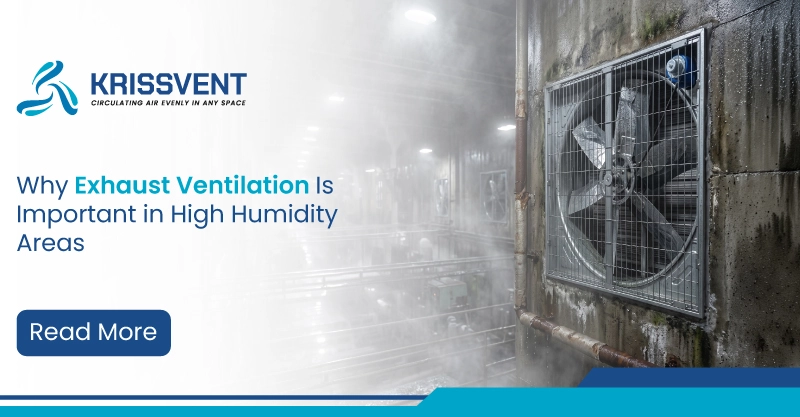
Heat gets all the attention in industrial ventilation, but humidity does the quieter, more expensive damage. Rust on stored stock, black patches on walls, dripping roof sheets, tripped panels, rejected batches: all of it traces back to moist air that had nowhere to go.
If your facility is in a coastal belt, runs through Indian monsoons, or generates steam and moisture in its own processes, the air inside is carrying more water than the building can handle.
Exhaust ventilation is the most direct fix: it physically removes moisture-loaded air before it condenses on your products, machines, and structure. Here’s why it matters and how to plan it.
What Counts as a High Humidity Area?
You’re in high humidity territory if any of these apply:
- Location: coastal and near-coastal regions like Mumbai, Chennai, Kochi, Surat, Visakhapatnam, and most of Gujarat’s port belt
- Season: monsoon months push indoor humidity high across nearly all of India, inland included
- Process: dyeing, washing, boiling, food processing, paper, laundries, and any operation releasing steam or water vapour indoors
- Reading: relative humidity consistently above 60% inside the facility
That 60% mark matters. Above it, mold starts growing and condensation risk climbs sharply. The comfortable, safe band for most facilities is 40 to 60% RH.
What High Humidity Does to a Factory
| Problem | What You See | What It Costs |
|---|---|---|
| Condensation | Dripping roof sheets, wet walls, sweating floors | Slip hazards, damaged stock below drip points |
| Mold & mildew | Black or green patches, musty smell | Rejected goods, hygiene audit failures |
| Corrosion | Rust on raw material, tools, and racking | Scrapped inventory, early equipment replacement |
| Electrical faults | Tripping breakers, panel damage | Downtime, fire risk |
| Worker fatigue | Sweat can’t evaporate, so bodies can’t cool | Slower output, heat stress even at moderate temperatures |
The worker point is easy to miss: at high humidity, 32°C feels like 40°C because sweat stops evaporating. Humid heat exhausts people faster than dry heat ever does.
Why Exhaust Ventilation Is the First Line of Defence
Moist air doesn’t fix itself. It rises, collects under the roof, condenses on the first cool surface it touches, and settles into corners where air doesn’t move. Three things make exhaust fans the right tool:
- They remove, not recirculate. A ceiling or wall fan stirs moist air around the building. An exhaust fan throws it out of the building and pulls fresher air in behind it. For humidity, removal is the whole game.
- They work at the source. Mounted near steam-producing processes or high on walls where warm moist air accumulates, exhaust fans catch moisture before it spreads through the facility.
- They prevent stagnant pockets. Continuous air exchange keeps humidity from building up in dead zones, store rooms, corners, and the space above racking where mold starts first.
One more reason this matters in humid regions: evaporative air coolers, the standard cooling choice in dry areas, lose effectiveness as humidity rises and add moisture of their own. In high humidity areas, exhaust-led ventilation isn’t one option among many. It’s the foundation everything else sits on.
Where to Place Exhaust Fans for Humidity Control
Placement decides half the performance:
- High on walls or the roof, because warm, moist air rises and collects at the top of the building
- Close to moisture sources, above washing lines, boilers, cooking areas, or dyeing sections, so vapour leaves before spreading
- Opposite the fresh-air inlets, so incoming air sweeps across the full floor instead of short-circuiting to the nearest exit
- Covering dead zones, store rooms and enclosed sections that central airflow never reaches
For buildings with large roof areas, solar roof ventilation fans add continuous extraction at the highest point at zero running cost.
Success Story: Humidity Under Control on the Gujarat Coast
A food processing unit near Gujarat’s coastline came to KRISSVENT with dripping roof condensation every monsoon and recurring mold complaints in its packing section. Our team installed heavy-duty exhaust fans high on the leeward walls, paired with fresh-air inlets across the production floor. Within weeks, roof condensation stopped, the packing area passed its next hygiene audit without observations, and the unit has run three monsoons since without a mold-related batch rejection.
Choosing an Exhaust Fan That Survives Humid Air
Humid air is hard on the fan itself, so build quality matters more here than anywhere:
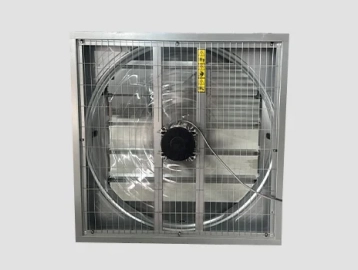
- Corrosion-resistant construction: heavy-gauge galvanized iron body and blades that handle years of moist air without rusting out
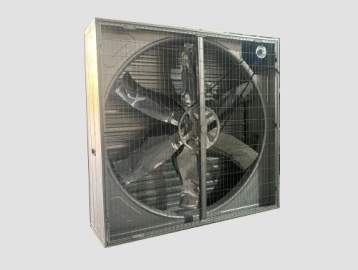
- Right capacity: KRISSVENT industrial exhaust fans range from 700 m³/hr for compact rooms to 44,000 m³/hr for large production halls, so extraction can match the building’s air volume
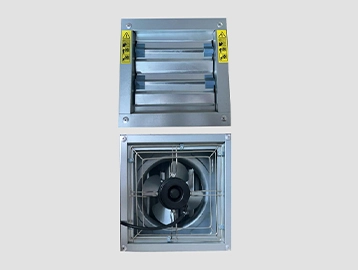
- Leakage-proof design: shutters that seal when the fan is off, keeping outside moisture from seeping back in
- Low noise: 70 dB or below even on the largest models, so continuous running doesn’t wear on workers
Sizing works on air changes: the fan bank should replace the building’s full air volume several times per hour, with more changes for wetter processes. A site assessment converts that into fan count and placement.
You may like to read this: Maintenance Tips for HVLS Fans: A Complete Guide for Long-Term Performance
Why Humid-Region Industries Choose KRISSVENT
- ISO and CE certified exhaust fans built for continuous duty in coastal and monsoon conditions
- Full range from 700 to 44,000 m³/hr, sized to your building, not a standard kit
- Placement planned around your moisture sources and wind direction, not just wall space
- 9.9+ million sq. m ventilated across 200+ Indian cities, including port-belt industrial zones
- Pan-India installation and after-sales support
 +91-7624021071
FAQs
1. What indoor humidity level is harmful for a factory?
2. Do exhaust fans help during monsoon when outside air is also humid?
3. Will an evaporative air cooler work in a high-humidity area?
4. Where should exhaust fans be installed for moisture control?
5. Can exhaust ventilation prevent rust on stored materials?
Conclusion
In high humidity areas, the biggest threat to your facility isn’t the temperature on the thermometer. It’s the water in the air, quietly rusting stock, feeding mold, and wearing out workers. Exhaust ventilation attacks the problem at its root by removing moisture-loaded air before it can settle anywhere.
Get the placement right, size for your building’s air volume, and choose fans built to survive the same humid air they’re removing. KRISSVENT does all three, starting with a free site assessment.