+91-7624021071

 Download Brochure


Food processing and packaging units need ventilation that removes steam, heat, odours and dust without pulling in insects or blowing dirty air onto food. FSSAI hygiene rules ask for adequately ventilated premises with screened openings. The most practical setup is screened exhaust fans in cooking and wet areas, HVLS fans in packing halls and finished goods stores, and wall fans aimed at workers rather than product. Air coolers suit only dry regions and areas where food is already sealed.
Food units have a ventilation problem that ordinary factories don’t. You need to remove heat and steam, but you cannot let in flies, dust or birds. You need air movement, but you cannot blow air from the raw material store over a tray of finished sweets.
Get this wrong and you face sweaty, tired workers, condensation dripping from the roof, mould on walls and awkward questions during an FSSAI inspection.
This guide shows which ventilation products fit which part of a food unit, and why.
What Does FSSAI Expect From Ventilation in a Food Unit?
FSSAI’s Schedule 4 hygiene requirements ask food businesses to keep premises clean, well lit and adequately ventilated, and to fit doors, windows and other openings with nets or screens so the premises stay free of insects.
During hygiene audits, inspectors typically look for:
- Adequate ventilation inside the premises
- Insect proof screens on any opening to the outside
- No condensation, mould or peeling paint from trapped moisture
- No signs of flies or pests
Units following FSSC 22000 or ISO 22000 for exports or large buyers face stricter airflow rules. These include removing steam, dust and odours, helping floors dry after wet cleaning, and stopping air from moving from raw areas into clean areas.
This guide covers equipment planning only. For compliance decisions, check with your food safety consultant or auditor.
Why Is Ventilation Harder in Food Units Than in Regular Factories?
| Challenge | What Causes It | What It Leads To |
|---|---|---|
| Steam and moisture | Boiling, frying, washing, wet cleaning | Condensation, mould, slippery floors |
| Heat | Ovens, fryers, kettles, sealing machines | Worker fatigue, product spoilage |
| Odours and oil fumes | Cooking, frying, roasting | Smells spreading into packing and stores |
| Fine dust | Flour, spices, sugar, powders | Dust settling on equipment and product |
| Pests | Unscreened fans and openings | Flies and insects near open food |
| Cross contamination | Air moving from raw to clean areas | Hygiene risk to finished product |
A good ventilation plan solves all of these together rather than one at a time.
Which Ventilation Product Fits Which Area of a Food Unit?
Food units have different zones, and each zone needs a different approach.
| Area | Main Problem | Best Fit | Avoid |
|---|---|---|---|
| Raw material store | Heat, humidity, odours | Screened exhaust fans | Coolers in humid climates |
| Washing and cutting | Moisture, wet floors | Exhaust fans with screens | Fans blowing over exposed product |
| Cooking, frying, boiling | Steam, heat, oil fumes | Exhaust fans placed near the heat source | Fans that push fumes into other zones |
| Primary packing (exposed food) | Heat for workers, product protection | Gentle exhaust with screened inlets, wall fans aimed at workers | Strong air over open trays or powders |
| Secondary packing (sealed product) | Heat, worker comfort | HVLS fans, wall fans | Nothing major |
| Finished goods store and dispatch | Heat, damp cartons | HVLS fans with exhaust fans | Coolers near cartons in humid weather |
How Do Exhaust Fans Help Food Units Stay Hygienic?
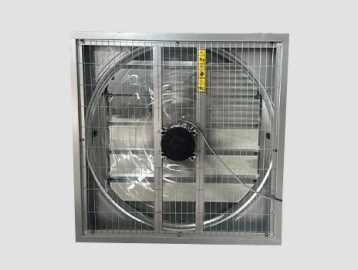
Industrial exhaust fans are the backbone of food unit ventilation. They pull steam, heat, odours and fumes out of the building, while fresh air enters through screened openings.
For food units, plan exhaust fans this way:
- Fit insect proof mesh or screens on every fan opening facing outside
- Use gravity shutters that close when the fan stops, so dust and insects can’t get in
- Place fans close to steam and heat sources such as kettles, fryers and ovens
- Set the airflow direction from clean to raw areas. Place fresh air inlets near packing, and exhaust fans near cooking or raw handling, so air moves away from finished product.
- Pick fan bodies that are easy to clean and resist rust from steam and washing
You can estimate how many fans you need with the exhaust fan calculator.
Where Do HVLS Fans Make Sense in Food Processing Units?
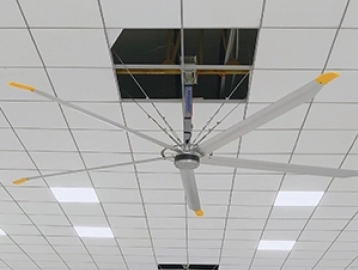
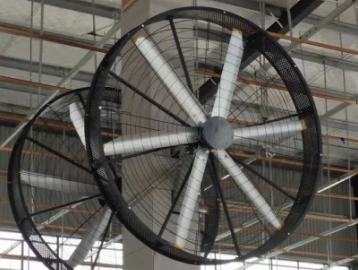
HVLS fans create a gentle breeze across a large floor with one slow, large ceiling fan. In food units, they fit best where the product is already packed or protected:
- Secondary packing and cartoning halls, where many workers stand along lines
- Finished goods warehouses, to stop heat build up and keep cartons dry
- Dispatch areas, where doors open often and heat comes in
- After wet cleaning, where steady air movement helps floors dry faster and reduces slip risk
Avoid running HVLS fans at high speed over exposed powders, open trays or light packaging film, where air movement can lift dust or disturb product. Use the HVLS fan calculator to check size for your packing hall.
When Should You Use Wall Fans in a Food Unit?
Industrial wall fans give direct relief at fixed workstations. Workers at fryers, sealing machines, manual sorting tables and packing lines often stand in one spot for hours, and a wall fan aimed at them makes a real difference.
The rule is simple: point the fan at the worker, not at the product.
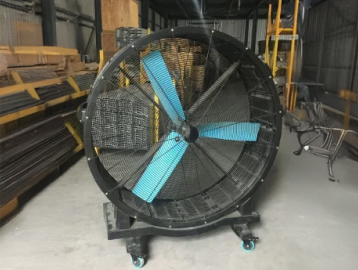
For temporary or changing packing setups during festival season or peak orders, mobile fans for packing stations can be moved as the layout changes.
Are Industrial Air Coolers Suitable for Food Processing Units?
Sometimes, but with care. Industrial air coolers cool the air by adding moisture. That brings three concerns in a food unit:
- Higher humidity can cause caking in powders, spices and dry snacks
- Damp air encourages mould on walls and ceilings
- The cooler’s water tank must be cleaned regularly to avoid stagnant water
Coolers work best in dry climates during hot months, in secondary packing or dispatch areas where product is sealed, and with exhaust fans running so humid air keeps leaving. Our duct cooler vs direct cooler guide explains which type suits larger units.
Which Food and Packaging Units Benefit From This Approach?
- Namkeen, snacks and frying units
- Bakeries, biscuit and confectionery plants
- Dairy and sweet manufacturing units
- Spice grinding and masala units
- Pickle, sauce and ready to eat food plants
- Beverage and bottling units
- Frozen food packing halls (outside cold rooms)
- Flexible packaging, carton and label printing units supplying food brands
Ventilation Checklist Before an FSSAI Inspection
- Every exhaust fan and opening facing outside has an insect proof screen
- Fans have shutters that close when switched off
- No condensation or mould on ceilings and walls
- Cooking and steam areas have exhaust close to the source
- Air moves from clean areas towards raw or cooking areas, not the other way
- No fan blows directly over exposed food or open packaging
- Fan blades, guards and screens are clean and free of grease and dust
- Floors dry quickly after wet cleaning
- Cooler water tanks, if used, are on a cleaning schedule
- Ventilation equipment is included in your cleaning programme records
KRISSVENT Installations in Food and Packaging Units
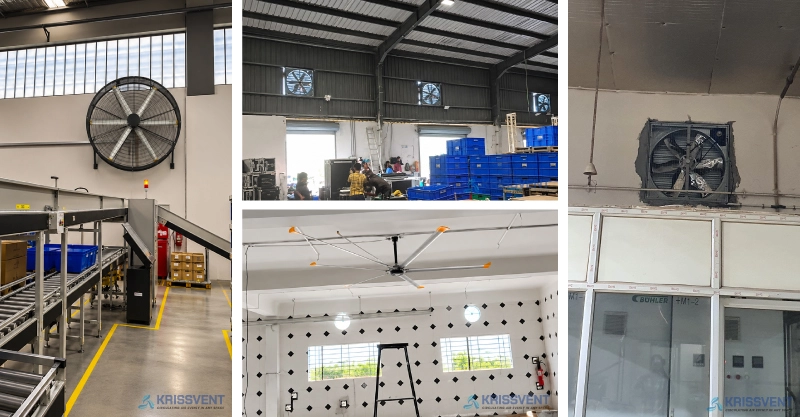
See more completed projects in our gallery.
Why Work With KRISSVENT for Food Unit Ventilation?
KRISSVENT manufactures exhaust fans, HVLS fans, industrial wall fans, mobile fans and industrial air coolers, so the full ventilation plan for a food unit can come from one team.
We plan zone by zone:
- Studying your process flow from raw material to dispatch
- Locating heat, steam and fume sources
- Planning airflow direction from clean to raw areas
- Choosing the right mix of exhaust, HVLS and wall fans
- Supporting installation with offices in Ahmedabad, Mumbai and Delhi NCR
Planning Ventilation for Your Food or Packaging Unit?
Share your unit layout, process steps, shed size and a few photos with KRISSVENT. We will suggest a ventilation plan that keeps your workers comfortable and your floor ready for inspection.
 +91-7624021071

FAQs
1. Is ventilation mandatory under FSSAI?
2. What type of exhaust fan is suitable for a food factory?
3. Can HVLS fans be used in food processing units?
4. Are air coolers safe for food packaging areas?
5. How do I stop condensation in a food processing unit?
6. Which direction should air flow in a food factory?
Conclusion
Ventilation in a food unit has two jobs. It keeps people comfortable, and it protects food from heat, moisture, dust and pests. No single fan does both everywhere. Screened exhaust fans handle steam and fumes, HVLS fans cool packing and storage halls, wall fans help workers at fixed stations, and coolers play a small role in dry, sealed areas. Planned zone by zone, this mix keeps your unit cleaner, cooler and ready for FSSAI inspection.