+91-7624021071

 Download Brochure

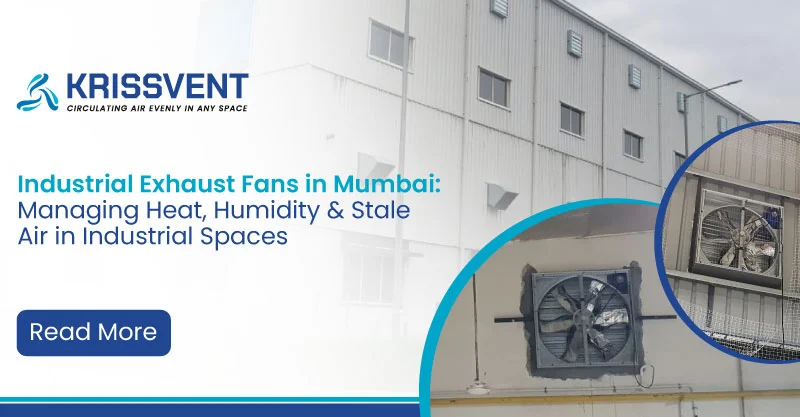
Industrial exhaust fans in Mumbai pull hot, humid and stale air out of factories and warehouses and draw fresh air in. This matters more in Mumbai than in most cities because the air stays humid for most of the year. For coastal and monsoon conditions, choose fans with rust-resistant bodies, rain protection and enough capacity to change the air in your shed several times an hour. KRISSVENT supplies industrial exhaust fans across Mumbai, Thane and Navi Mumbai from its office at Wagle Industrial Estate, Thane.
Walk into a closed factory in Bhiwandi or Taloja during the monsoon, and you feel it straight away. The air is heavy, the floor is damp, and there is a smell of fumes or old stock that never quite leaves. Workers sweat even when the temperature isn’t extreme, because the moisture has nowhere to go.
Fans that just push air around don’t fix this. The air needs to leave the building.
Why Is Ventilation Harder in Mumbai Than in Other Cities?
Mumbai’s coastal climate creates three problems at once:
- Humidity most of the year. Sweat does not dry easily, so people feel hotter than the thermometer says.
- A long, heavy monsoon. From June to September, wet air enters through every opening, and floors, walls and stock stay damp.
- Salty sea air. Metal parts on fans, roofs and machines rust faster here than inland.
Add machine heat, cooking fumes, chemical vapours or dust from production, and a closed shed quickly becomes uncomfortable and unhealthy.
What Does an Industrial Exhaust Fan Do?
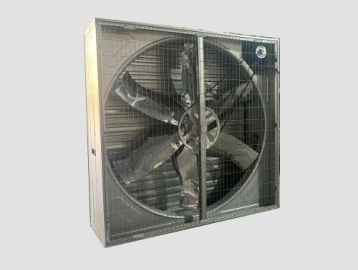
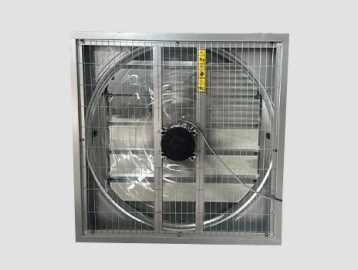
An industrial exhaust fan is a large wall or roof-mounted fan that pushes air out of a building. As it removes inside air, fresh outside air comes in through doors, windows or vents to replace it.
In simple terms, it swaps the bad air for new air. That one action removes heat, moisture, fumes, odours and dust together. KRISSVENT industrial exhaust fans are built for large factories, warehouses and workshops where small domestic fans can’t keep up.
Which Mumbai Industries Need Exhaust Fans the Most?
| Industry | Main Problem | Typical Areas |
|---|---|---|
| Chemical and pharma units | Vapours and fumes | Taloja, Dombivli, Ambernath MIDC |
| Warehouses and logistics | Trapped heat and damp stock | Bhiwandi, Vasai, Panvel |
| Engineering and fabrication | Welding smoke and machine heat | Wagle Estate, TTC MIDC (Turbhe, Rabale, Mahape) |
| Food processing and commercial kitchens | Steam, smoke and smells | Andheri MIDC, Navi Mumbai |
| Printing, plastic and packaging | Heat from machines and chemical smells | Across MMR industrial estates |
| Garment and textile units | Lint, heat and humidity | Bhiwandi and suburban clusters |
How Many Exhaust Fans Does Your Shed Need?
The number depends on how big your space is and how often the air needs to be replaced each hour.
Here is the simple method:
- Work out the volume of your shed: length × width × height.
- Decide how many times per hour the air should be replaced. A storage warehouse needs fewer air changes. A hot production floor or fume area needs many more.
- Multiply the volume by that number. This gives the total air your fans must remove every hour.
- Divide by the capacity of one fan. This gives the number of fans.
Example: A shed of 60 m × 30 m × 8 m has a volume of 14,400 m³. If the air needs to be replaced 10 times an hour, the fans must remove 1,44,000 m³ of air per hour. With fans that move 20,000 m³ per hour each, you would need about 7 or 8 fans.
You can skip the maths with the exhaust fan calculator. The final count should still be confirmed after a site visit, because doors, openings and heat sources change the result.
Where Should Exhaust Fans Be Installed?
Good placement matters as much as the number of fans.
- Mount fans high on the wall. Hot, moist air rises, so remove it from near the roof.
- Put fresh air openings on the opposite side. Air then sweeps across the full shed instead of taking a shortcut.
- Place fans close to heat and fume sources such as ovens, welding bays, paint areas and chemical mixing points.
- Don’t put an exhaust fan right next to an open door. It will just pull in the same air it pushes out.
- Keep the outside clear. A wall or building just outside the fan blocks its airflow.
What Should Mumbai Buyers Check Before Buying an Exhaust Fan?
Mumbai conditions are harder on fans than most places. Before you buy, check:
| Check | Why It Matters in Mumbai |
|---|---|
| Rust-resistant body and blades | Salty, humid air corrodes ordinary metal quickly |
| Rain protection | Louvres or rain hoods stop water entering during the monsoon |
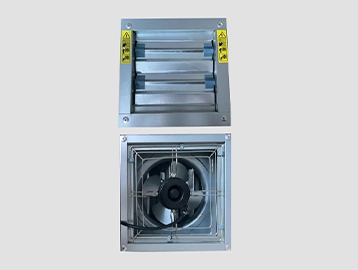
| Shutters that close when the fan is off | Keep rain, dust and birds out |
| Motor protection against moisture | Damp air shortens motor life |
| Fan capacity for your shed size | Undersized fans leave humidity behind |
| Flameproof rating, if needed | Required in units handling flammable vapours or solvents |
| Easy access for cleaning | Grease, dust and lint build up on blades |
Exhaust Fan, HVLS Fan or Air Cooler: What Works Best in Mumbai Humidity?
Each one does a different job, and humidity changes which one helps most.
| Equipment | What It Does | Fit for Mumbai |
|---|---|---|
| Exhaust fan | Removes hot, humid and stale air | Essential all year |
| HVLS fan | Creates a gentle breeze across the full floor | Good partner to exhaust fans |
| Solar roof ventilation fan | Pushes hot air out through the roof at no power cost | Useful for metal roof sheds |
| Air cooler | Lowers temperature by adding moisture | Limited use, since the air is already humid |
The setup that works best in most Mumbai sheds is:
Exhaust Fans to Remove Humid Air + HVLS Fans to Keep the Floor Dry and Comfortable
HVLS fans help floors and stock dry faster after rain, while exhaust fans carry the moisture outside. For metal roof buildings, solar roof ventilation fans take out the heat trapped under the sheets. For fixed workstations, industrial wall fans give direct relief to workers.
Air coolers work well in dry heat, but in Mumbai they often make a space feel stickier. They suit only short dry spells or enclosed zones with strong exhaust.
How Much Does an Industrial Exhaust Fan Cost in Mumbai?
The price of an industrial exhaust fan in Mumbai depends on:
- Fan size and air capacity
- Motor type and power
- Body and blade material
- Rain louvres, shutters or special protection
- Number of fans and installation height
A complete ventilation plan for a large shed usually costs much less than air conditioning it, and it also solves humidity and fumes. Share your shed details with KRISSVENT for an exact quote.
KRISSVENT Exhaust Fan Installations
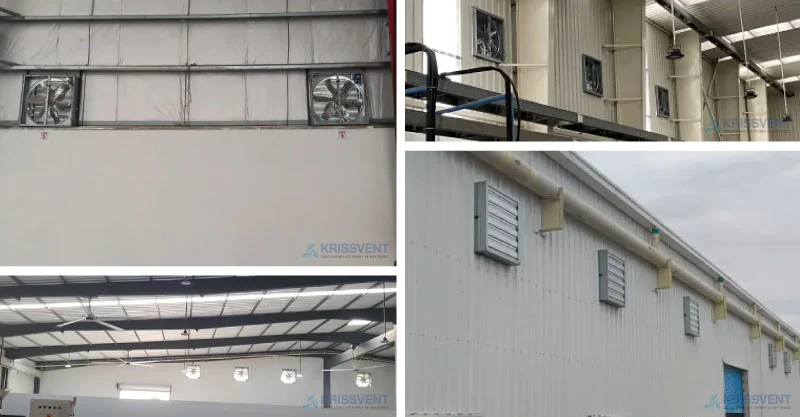
See more completed projects in our gallery.
Why Choose KRISSVENT for Industrial Exhaust Fans in Mumbai?
KRISSVENT is an industrial fan manufacturer with an office at Wagle Industrial Estate, Thane, serving businesses across Mumbai, Thane, Navi Mumbai, Bhiwandi and the wider MMR.
What you get:
- Site visits to study your shed, openings and heat sources
- Fan selection and placement planned for humid, coastal conditions
- Installation and after sales support from a nearby team
- One supplier for exhaust fans, HVLS fans, wall fans, mobile fans and solar roof ventilators
KRISSVENT also has offices in Ahmedabad and Delhi NCR for clients outside Maharashtra.
Get a Ventilation Plan for Your Mumbai Factory or Warehouse
Send us your shed size, ceiling height, what happens inside (production, storage, cooking, chemicals) and a few photos. We will suggest the right number of exhaust fans, their placement and anything else the space needs.
Visit: 405, Oracle Business Hub, Plot No A 176, Opp Kalpataru Prime, Road No 16/Z, Wagle Industrial Estate, Thane (West) 400604
 +91-7624021071

FAQs
1. Where can I buy industrial exhaust fans in Mumbai?
2. Do exhaust fans reduce humidity inside a factory?
3. Which exhaust fan is best for Mumbai’s coastal climate?
4. Can exhaust fans be used during heavy monsoon rain?
5. Is an air cooler a good option for factories in Mumbai?
6. Do I need a flameproof exhaust fan?
7. How often should industrial exhaust fans be serviced in Mumbai?
Conclusion
Heat in Mumbai is only part of the problem. Humidity, monsoon dampness and stale air make industrial spaces uncomfortable and hard on people, machines and stock. Industrial exhaust fans fix the root cause by moving that air out of the building. Choose fans built for coastal conditions, size them to your shed, place them well, and pair them with HVLS fans for the best result.