+91-7624021071
 Download Brochure
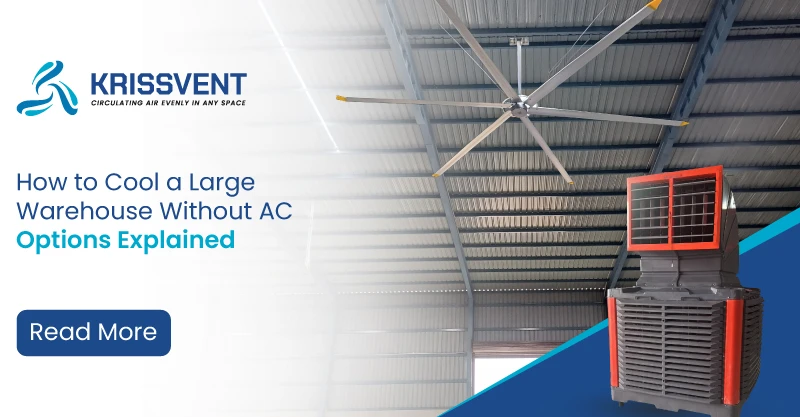
Cooling a large warehouse is challenging because traditional AC systems are often expensive and ineffective for high ceilings, open spaces, and continuous operations.
Many businesses use small fans or split AC systems, but they fail to provide proper cooling across the full area.
The smarter solution is using practical systems like HVLS fans, industrial duct air coolers, and proper ventilation planning.
At KRISSVENT, we help warehouses create cost-effective cooling solutions built for real industrial conditions.
Why Traditional AC Does Not Work Well for Large Warehouses
Air conditioning works best in closed, controlled spaces.
Warehouses are very different.
They usually have:
- High roofs
- Large open floor areas
- Frequent door opening and closing
- Loading dock operations
- Heat generated by machines
- Continuous staff movement
- Semi-open working zones
This makes cooling with AC difficult because cool air escapes quickly and energy consumption becomes very high.
The cost of installing and running central AC in a warehouse can be extremely expensive.
That is why industries prefer alternative cooling solutions.
Best Options to Cool a Large Warehouse Without AC
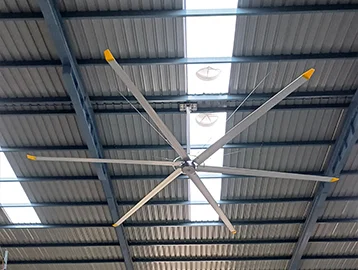
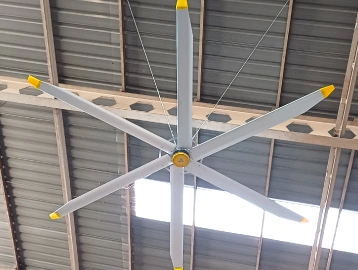
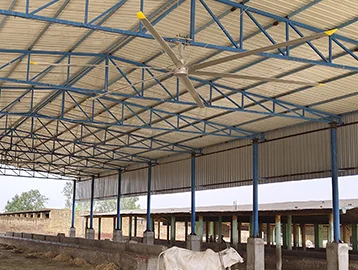
1. Install HVLS Fans for Full-Space Air Circulation
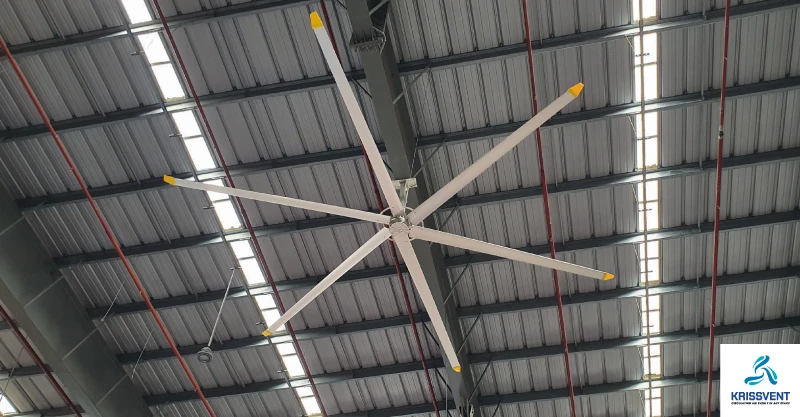
HVLS stands for High Volume Low Speed.
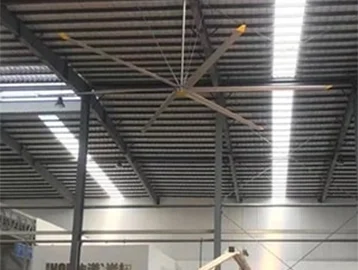
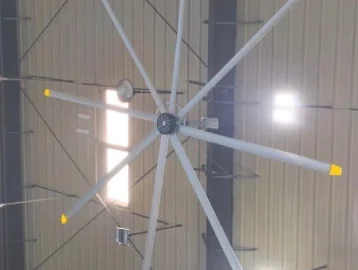
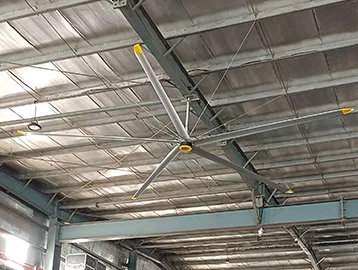
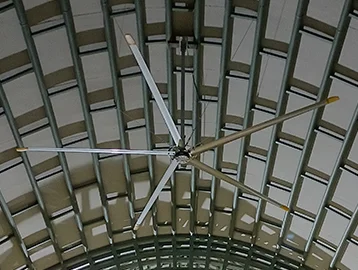
These large industrial ceiling fans move massive amounts of air slowly and evenly across large spaces.
Instead of direct cooling like AC, they improve air movement and create a wind-chill effect that makes workers feel cooler.
Benefits of HVLS Fans
- Wide airflow coverage
- Reduced heat pockets
- Better worker comfort
- Lower humidity buildup
- Lower electricity use
- Quiet operation
- Less maintenance
One HVLS fan can often replace multiple smaller fans.
This makes it one of the most effective warehouse cooling solutions.
2. Use Industrial Duct Air Coolers for Direct Cooling
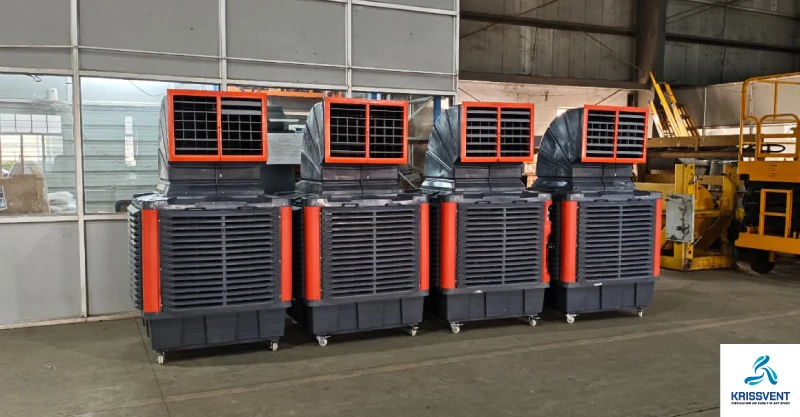
Industrial duct air coolers use evaporative cooling to supply fresh cooled air across warehouse zones.
They are ideal for:
- Packing areas
- Worker zones
- Loading sections
- Production-connected warehouse areas
- Storage sections with heat buildup
These systems provide stronger cooling than standard fans while consuming much less power than AC.
Why Duct Coolers Work Well
- Fresh air cooling
- Lower operating cost
- Better cooling coverage
- Suitable for large open areas
- Practical for industrial use
They work especially well when planned with proper duct layout.
You May Like to Read This: Types of Industrial Coolers
Know the types of industrial air coolers and find the best one for your premises.
3. Combine HVLS Fans + Industrial Duct Air Coolers
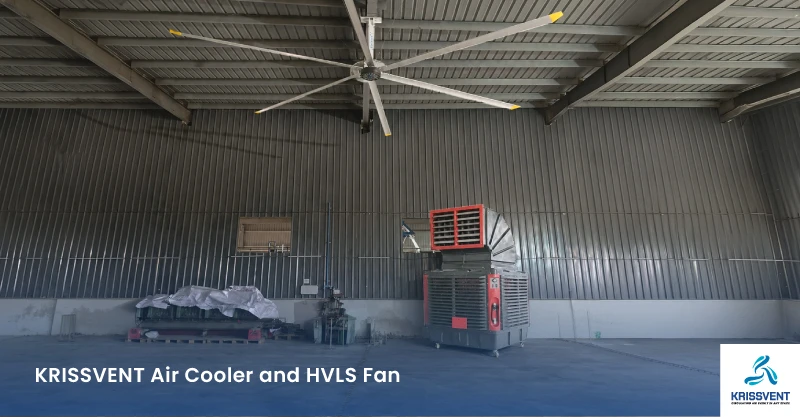
This is often the best solution for mega warehouses.
HVLS fans alone improve circulation.
Duct coolers alone provide direct cooling.
Together, they create faster and more balanced warehouse cooling.
How This Combination Works
- Duct coolers push fresh cooled air into key zones
- HVLS fans distribute that air across the full warehouse
- Hot air buildup reduces faster
- Cooling becomes more uniform
- Energy efficiency improves significantly
This creates a practical cooling system without the massive cost of central AC.
For large warehouses, this combination is often the smartest long-term investment.
4. Improve Exhaust Ventilation
Hot air rises.
Without proper exhaust systems, heat gets trapped inside the warehouse roof area.
Installing exhaust fans helps remove:
- Hot trapped air
- Humidity
- Dust
- Fumes
- Odors
This improves overall cooling performance and supports other systems like HVLS fans and duct coolers.
Better exhaust means better airflow balance.
5. Use Roof Ventilation Solutions
Solar roof ventilators and roof extractors help remove heat naturally from the top section of the warehouse.
This reduces indoor temperature without increasing electricity bills.
They work especially well for:
- Large storage warehouses
- Logistics hubs
- Semi-open warehouses
- High-roof industrial buildings
Roof ventilation improves heat release and supports complete warehouse airflow management.
6. Optimize Natural Airflow
Sometimes small structural changes improve cooling significantly.
This includes:
- Better inlet and outlet air planning
- Cross ventilation
- Window airflow direction
- Controlled fresh air entry
- Reduced blocked airflow zones
Cooling works better when airflow design supports the equipment.
Which Cooling Solution Is Best for Your Warehouse?
It depends on:
- Warehouse size
- Ceiling height
- Type of stored materials
- Worker count
- Heat generated by operations
- Loading dock activity
- Open vs closed sections
- Budget and long-term operating cost
There is no one-size-fits-all solution.
The best system is the one designed around your actual warehouse conditions.
Why Industries Choose KRISSVENT for Warehouse Cooling
KRISSVENT provides industrial ventilation and cooling solutions designed for real warehouse challenges.
Our solutions include:
- HVLS fans
- Industrial duct air coolers
- Exhaust ventilation systems
- Solar roof ventilators
- Industrial wall fans
- Custom airflow planning
We help businesses create efficient cooling systems that improve comfort, productivity, and operational performance.
Looking for the Best Warehouse Cooling Solution Without AC?
Reduce heat, improve airflow, and create a better working environment without high AC costs, with KRISSVENT solutions.
FAQs
1. Can a warehouse be cooled without AC?
2. Are HVLS fans enough for warehouse cooling?
3. Do industrial duct coolers work in open warehouses?
4. Is central AC too expensive for warehouses?
5. What is the best cooling setup for a mega warehouse?
Conclusion
Cooling a large warehouse does not always require expensive air conditioning.
The right combination of HVLS fans, industrial duct air coolers, and proper ventilation can provide better airflow, lower operating costs, and improved worker comfort.
At KRISSVENT, we help industries choose practical cooling solutions designed for long-term warehouse performance.